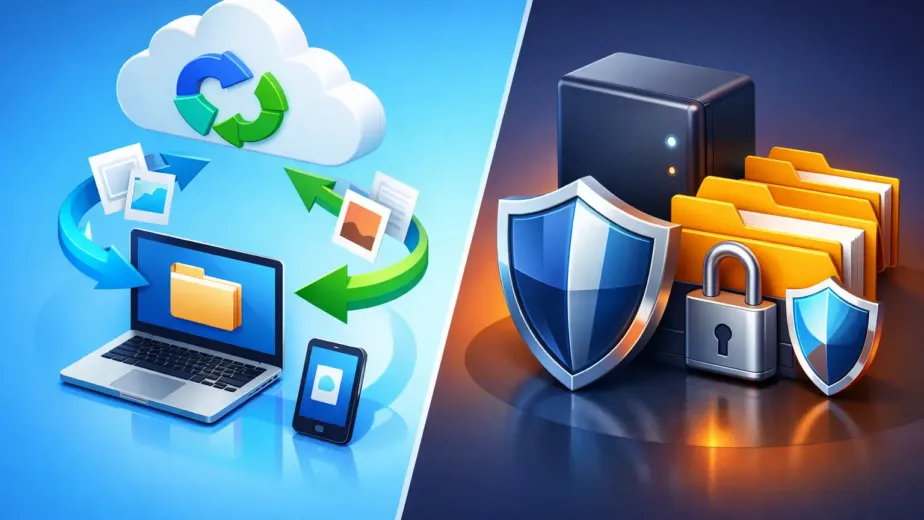
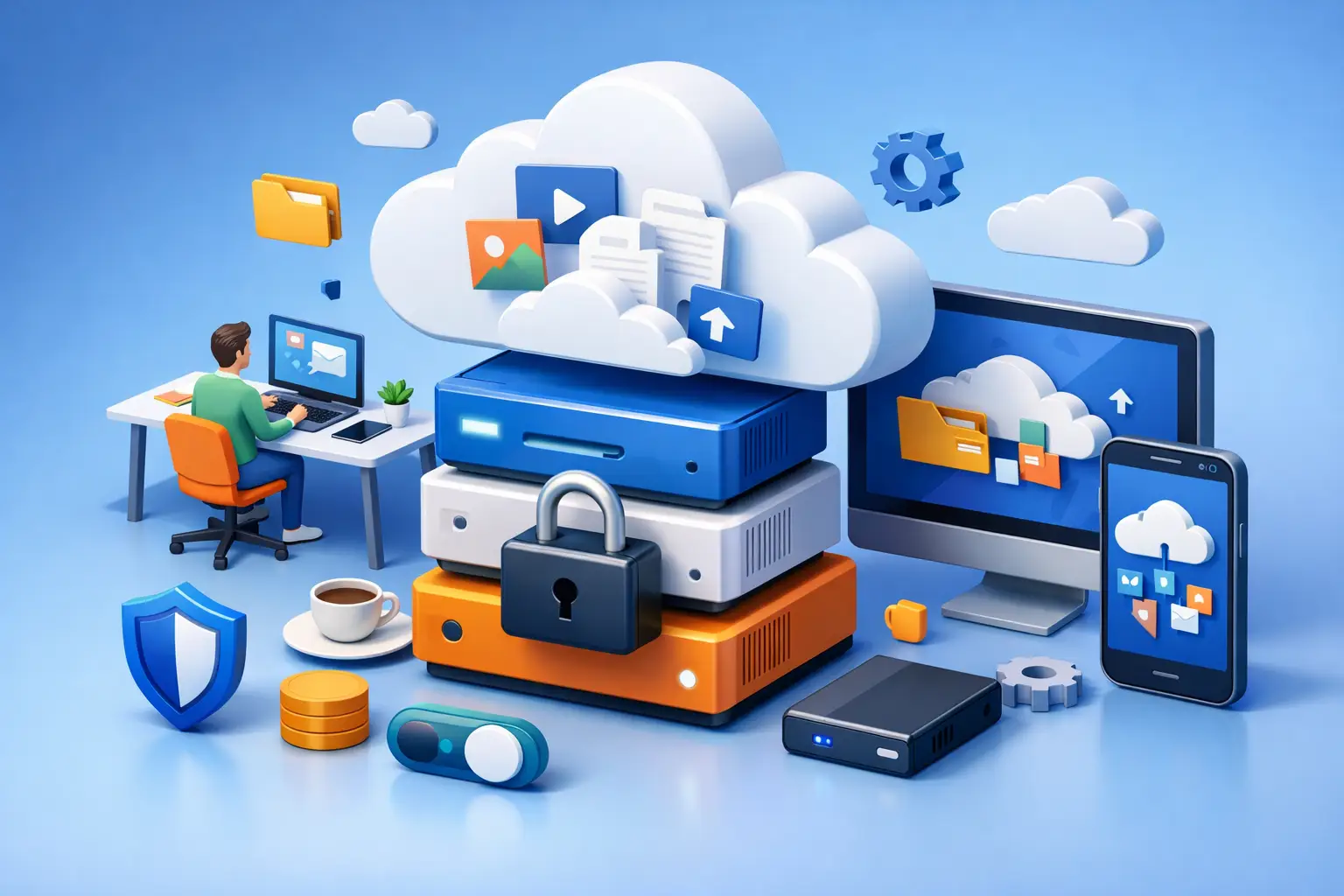
A client needs the final brand files again. Your laptop is in the shop, the attachment is too large to email, and the version in your downloads folder may not be the approved one. This is where cloud storage for freelancers becomes more than a place to keep files. It becomes the system that protects your work, your client relationships, and your ability to respond without delay.
Freelancers manage a surprising amount of business-critical information: contracts, invoices, source files, proposals, recordings, design exports, project briefs, tax documents, and personal backups. When those files live across a desktop, phone, external drive, and email inbox, finding the right item can take longer than the task itself. A secure cloud workspace creates one dependable home for the files that keep your business moving.
Why freelancers need more than a basic backup
A backup is essential, but it does not solve every daily workflow problem. A drive that copies files in the background may protect against device loss, yet it may not make a project easy to access from a client meeting, share with a collaborator, or restore after an accidental edit.
Freelance work also changes quickly. A photographer may upload hundreds of images after a shoot. A consultant may need to send a sensitive report to a client before a deadline. A video editor may need to retrieve a prior cut after feedback changes direction. The right storage service supports those moments without adding a complicated technical process.
The goal is simple: your files should be available when you need them, protected when you do not, and shared only with the people you choose.
What to look for in cloud storage for freelancers
Storage capacity matters, but it is only one part of the decision. A 2GB plan can be enough for essential documents and a few active files. Creators who work with high-resolution photography, video, audio, or large design packages will usually need substantially more room. Before choosing a plan, consider your current project folders and leave capacity for revisions, archives, and backups.
Security deserves equal attention. Client work often includes private financial information, unreleased creative assets, internal plans, or personal data. Look for encrypted storage and account controls that help protect files both at rest and while they are being accessed. Strong passwords and multi-device account awareness are practical habits, too. Security is not just a feature your provider supplies – it is a shared process that starts with knowing who can access your account.
Sharing controls are where a professional storage setup separates itself from a general file dump. Password-protected links can add a useful layer of protection when sending sensitive files. Expiring links help limit access after a review period or project handoff. Folder permissions let you decide whether someone can view, download, edit, or manage content. Those controls reduce the need to send duplicate attachments and give you a clearer way to manage access when a project ends.
Version history is another feature worth prioritizing. Files change rapidly during freelance projects, and not every change is an improvement. The ability to restore an earlier version can save a design, presentation, spreadsheet, or contract from an accidental overwrite. It also gives you more confidence when experimenting with revisions.
Build a file system you can actually maintain
Cloud storage works best when the organization is simple enough to follow during a busy week. Avoid creating a folder structure so detailed that filing one document becomes a decision. Start with a clear top-level layout based on how you run your business.
For example, you might separate folders by Clients, Business Operations, Marketing, Templates, and Archive. Inside each client folder, use the same subfolders for Contracts, Briefs, Working Files, Deliverables, and References. Consistency makes it easier to locate work months later, even when you are switching between projects.
File names should carry useful information without becoming a paragraph. A format such as `Client_Project_Asset_v01_YYYY-MM-DD` is easy to scan and sorts predictably. For final delivery, use a clear label such as `FINAL` only after the client has approved the file. Until then, version numbers are safer than names like `final-final-revised-2`.
Create an archive process as well. When a project closes, move its working files into an archive folder rather than deleting them immediately. Your contract, industry, and client preferences should guide how long you retain files. Keep in mind that long-term storage needs can grow quickly for media-heavy work, so capacity planning should include finished projects, not just your current workload.
Share files without giving away control
Email attachments are convenient for small documents, but they are not ideal for large media files, repeated revisions, or confidential materials. A share link can make delivery faster while keeping the file in your controlled workspace.
Before sharing, ask three questions: Who needs access? What should they be able to do? How long should that access last? A client reviewing a draft may only need view or download access. A subcontractor working on an active deliverable may need permission to upload files to a shared folder. A link to a time-sensitive proposal may need to expire after the decision window closes.
This approach is especially useful when projects involve several stakeholders. Rather than emailing new copies to everyone after every change, keep the current approved file in one location. You reduce confusion, avoid attachment limits, and have a better record of how access was managed.
Be careful with overly broad shared folders. It may be easier to invite a client into an entire workspace, but that can expose unrelated project materials or internal business files. Share the smallest appropriate folder, then review permissions when the project ends.
Protect your freelance business across devices
Freelancers rarely work from a single device forever. You may start a proposal on a desktop, check a contract from a tablet, and send an approved asset from your phone. Browser-based storage is useful because it keeps your files accessible without requiring a complicated installation process on every machine.
That convenience should not mean leaving access unmanaged. Review the devices connected to your account periodically, especially after replacing a computer, selling a tablet, or working from a borrowed device. Sign out of sessions you no longer recognize or need. Use a unique, strong password, and do not share account credentials with clients or collaborators when a permission-controlled folder will do the job better.
For critical files, keep more than one layer of protection. Cloud storage can be your central workspace and recovery point, while a separate backup routine can provide additional resilience for your most important records. The right balance depends on your workload, file size, client obligations, and tolerance for downtime.
Choose a plan based on your working reality
There is no single storage tier that fits every freelancer. A writer, coach, or virtual assistant may be well served by modest capacity and secure document sharing. A photographer or videographer will likely benefit from larger storage, faster transfers, and tools that make it easier to preview and manage media. Consultants and agencies may need shared workspaces, granular roles, activity tracking, and administrative controls as more people join a project.
Start with the files you use now, then plan for the next six to twelve months. Consider how often you upload large files, whether clients need recurring access, and how many completed projects you keep available. A low-cost plan that fills up immediately can create friction. On the other hand, paying for advanced team controls before you have collaborators may not be necessary.
Cloud8USA offers capacity-based options that can grow from basic file protection to professional sharing, version history, team workspaces, and higher-speed transfers. The useful feature is the one that makes your real workflow safer and easier, not the one with the most technical-sounding name.
Make storage part of your client experience
Clients notice how work is delivered. A clean folder, a clearly labeled final file, and a protected link signal that you run an organized business. They also make it easier for clients to find what they need without asking you to resend it weeks later.
Set aside a few minutes at the end of each project to organize deliverables, confirm permissions, archive working files, and make sure the final version is easy to identify. That small habit protects your time and reinforces the trust clients place in you. When your files are secure, private, and always accessible, you can spend less energy searching for work and more energy doing work you are proud to deliver.